
We’ve Answered a Lot of CCaaS Tenders This Year. Here’s What Buyers Keep Getting Wrong.
(5 min read)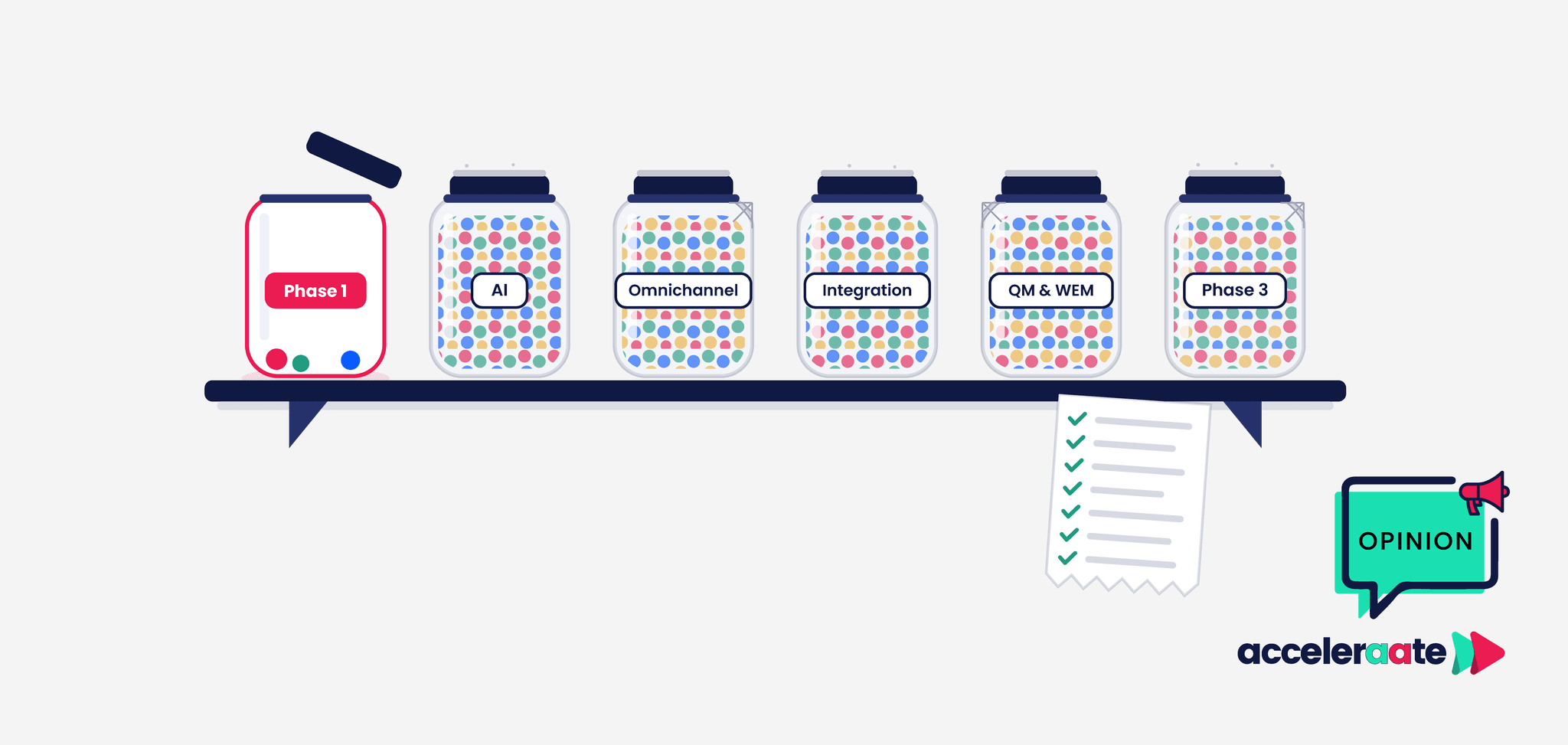
We’ve responded to more contact centre tenders in 2026 than in any year since Acceleraate started. Councils, retailers, healthcare, utilities, financial services, and global brands. Some via frameworks, some direct, and some alongside partners.
Back in February 2023, I wrote that the RFP process is failing businesses and tech vendors. Nearly four years on, very little has changed. Some of the same problems (the kid in a sweet shop included) still turn up in tender after tender.
This isn’t another moan, though. Tenders exist for good reasons: Fairness, governance, value for money etc. But after reading thousands of requirements this year, the same patterns keep showing up. And they’re costing buyers far more than they cost bidders.
Here are some that we see again and again, and what we’d do instead.
1. Writing a spec for the platform you’re leaving
The most common requirements document we see is, in effect, a description of the current system. Every IVR, every queue, every number, rebuilt like-for-like in the spec.
We regularly see estates with hundreds of numbers feeding dozens of IVRs that nobody fully understands any more. Write that into a tender and you’ll buy a shinier version of the same complexity.
Do this instead: Specify the outcomes and the customer journeys, not the menus. Ask bidders how they’d simplify, standardise and modernise. The best answer usually involves fewer things, not more.
2. Asking “can it?” instead of “how fast?”
Most tenders are hundreds of lines of “Can the solution…?”. Every modern CCaaS platform says yes to almost all of them. So the scoring spreadsheet makes every bidder look near-identical, and the real differences get lost.
What actually separates platforms and partners is speed to value and delivery risk. How quickly will you be live? How safely? What will be working in week eight, not month eighteen? Very few tenders ask.
Do this instead: Ask for evidence, not assertions. Contract-to-go-live times on comparable projects. What was live at launch versus promised for later. References you can actually call.
3. Specifying every channel, then living on voice
Omnichannel is still the tender favourite. Voice, email, webchat, SMS, WhatsApp, social, video. All mandatory, all weighted. Then we look at the volumes. In tender after tender this year, voice still carried the overwhelming majority of contact, often 80% or more.
Planning for more channels is sensible. The mistake is spending scoring weight on channels you won’t switch on for two years, while underweighting the one or two that carry your service today.
Do this instead: Weight requirements by volume and priority. Make voice brilliant first: smarter routing, callbacks, automation and AI on the phone line. Then add the channels your customers actually ask for.
4. Treating integration as one line in the spreadsheet
“The solution must integrate with our CRM.” One line, often scored yes or no.
Yet integration is where most of the value, and most of the risk, actually lives. Screen pop is table stakes. The real gains come from surfacing customer context, syncing outcomes back to the case, summarising every interaction and triggering the next step automatically. Get it wrong and agents spend their day copying and pasting between screens.
Do this instead: Name your systems and describe the data that needs to move. Then ask bidders exactly how they’d do it, who builds it, who supports it, and what happens if your CRM changes.
5. Treating AI as a tick box
Every tender now has an AI section. Most read like a feature checklist. Sentiment analysis? Agent assist? Virtual agent? Summarisation? Yes, yes, yes, and yes.
What’s rarely asked: which contact types should AI handle first, what does success look like, how will it be governed, and who keeps improving it after launch? That’s where AI projects either land or stall.
Buckinghamshire Council achieved 63% voice containment and 88% web containment with Zoom Virtual Agent. That came from choosing the right use cases and designing them properly. Not from ticking a box.
Do this instead: Share your top five contact reasons, and ask bidders how they’d automate them. Ask for results in production, not a polished demo.
6. Scoring the licence, not the cost to serve
Commercial negotiation almost always centres on the licence. Cost per seat, discount, term. It’s easy to compare and easy to defend. It’s also usually the smallest number in the room.
For argument’s sake, say a CCaaS licence costs £1,200 per agent per year. The person using it costs around £33,000. The licence is roughly 3.5% of the total. The other 96.5% is people.
Scale that to a 100-seat contact centre. Licences come to £120k a year. People cost £3.3m. Squeeze another 10% off the licence and you save £12k. Free up 5% of agent time and you save £165k. Every year.
That’s where the big-ticket items are: agent time, avoidable contact, repeat calls, manual wrap-up and after-call work. Add an estate that stops improving the day the project team rolls off, and the costs keep compounding. A platform and partner that remove even a fraction of that are worth more than any licence discount you’ll ever negotiate. Licence cost still matters. It just shouldn’t be the number that decides the deal.
Oxfordshire County Council took £700k of cost out in 18 months through continuous improvement after go-live. Not through a cheaper licence.
Do this instead: Score total cost to serve, not cost per seat. And ask what happens in months two to twenty-four: who’s optimising, how often, and how improvement is measured.
7. The kid in a sweet shop
Tenders love a roadmap. Phase 1 replaces the platform. Phase 2 brings AI self-service and CRM integration. Phase 3 adds quality management, workforce management and new channels. Everything goes in the basket.
Then Phase 1 goes live, and that’s where it stops. The project team disbands, budget gets reallocated and business as usual takes over. Two years on, the licences bought for Phase 3 are still sitting there unwrapped. We see it so often it’s almost laughable. In our experience ambition is rarely the problem. Momentum is.
Do this instead: Fund and govern the roadmap, not just day one. Put owners, dates, and budget against every phase in the business case. Then ask bidders how they’ll keep you moving once Phase 1 is live, and commit to it.
8. Leaving it too late
Your current platform is out of contract, or out of support, in December. The vendor decision lands in October. Now there are eight weeks to design, build, integrate, test, train, and migrate a contact centre that serves thousands of customers a day.
It can be done. We’ve done it. But fast doesn’t automatically mean good. Compressed timelines put huge pressure on your own teams and your delivery partner. Testing gets squeezed, training gets rushed, and the transformation you tendered for becomes a lift-and-shift. A late decision is usually a sign of short-term thinking. It treats the platform as a contract to renew, not a roadmap to deliver.
Do this instead: Work back from your end date. Allow time for procurement, a properly planned migration and a buffer for the unexpected. If your contract ends in December, the decision should be made in the summer, not the autumn. Move fast, by all means. Just start early enough that fast is a choice, not an emergency.
What a better tender looks like
The best tenders we’ve seen this year had a few things in common:
They started with data: volumes by channel and contact reason, not a list of features.
They described customer journeys and outcomes, not IVR menus.
They weighted requirements by impact, not by how many there were.
They named the systems to integrate and the data that needed to move.
They asked for production evidence and references, not empty promises.
They scored cost to serve over the life of the contract, including life after go-live.
They talked to the people who answer these day-in day-out, before writing the spec.
And they were shorter. A 600-line spreadsheet doesn’t make for a better decision, it just makes for a longer one.
Buy the outcome, not the spreadsheet
None of this is about making life easier for bidders, although we wouldn’t complain. It’s about buying the outcome you actually need, faster and with less risk.
Got a tender coming up in 2027, or halfway through writing one? We’re happy to give it a sense-check. No pitch, just a second pair of eyes from people who answer these for a living.
Got a tender on the horizon?
About the author







 Manchester, United Kingdom



Part of Founded Group Limited